Tucson tech: Local company rolls out bandwidth booster TM

ORIGINAL ARTICLE APPEARS on TUCSON.COM

Everyone’s heard of AM and FM. Are you ready for TM?

A Tucson-based company is working to commercialize a new communications technology – called Transpositional Modulation – that promises to multiply data-transmission rates for things like satellite and cellphone communications.

TM Technologies Inc., a spinoff of Tucson-based Medusa Scientific, said it has successfully demonstrated its “breakthrough” modulation technology after three years of intensive research and engineering.

The company says its technology can at least double data throughput by simply adding a signal in the same frequency band or by adapting it to existing communications technologies.

Medusa Scientific Chairman Dan Hodges said the technology could catch on quickly, as satellite and cell-phone carriers seek to slake their insatiable thirst for bandwidth.

“The idea behind it is, they’re limited in bandwidth,” Hodges said. “We saw that coming, so we said ‘how can you make this work where you can pack more data right up to the theoretical limit?’ ”

While enabling high-bandwidth technologies like streamed high-definition TV, boosting data throughput can also save money, Hodges said, noting that renting a single satellite data transponder can cost upward of $150,000 a month.

While TM technology is new, it comes with a pedigree.

The inventor, Medusa chief scientist Rick Gerdes, initially developed the concept in the 1980s, when he came up with the idea as a standard for digital television. That technology – which was tested at KMSB-TV Channel 11 in Tucson – showed promise, but the company withdrew its proposal when it became apparent the Federal Communications Commission favored other industry technologies, Gerdes said.

The idea was later incorporated into a software-based system that used part of the TV broadcast signal to rapidly download selected Web data to a computer via a TV tuner card.

Gerdes, who joined Medusa about three years ago, said the old DTV technology formed the foundation for the new TM technology, which is far more sophisticated.

He said the patents-pending TM system works by allowing two “carrier” signals to be carried on the same frequency, using time information to separate out the data.

In contrast, AM (amplitude modulation) carries information such as music audio by varying the amplitude, or strength, of a transmitted signal in relation to the information being sent. With FM (frequency modulation), the frequency of the carrier signal is varied.

Other researchers continue efforts to pack more information into the same bandwidth, using advanced data-compression schemes, for example.

“This is a whole new concept,” Gerdes said. “Even an engineer at FCC headquarters said that it was the first new form of modulation since FM,” said Gerdes, who started his electrical engineering career building his own ham-radio equipment at age 13.

While you won’t see “TM radios” anytime soon – the initial system works at the network level – the technology can greatly augment current communications systems.

TM is separately more efficient than either AM or FM, and it’s “mutually transparent” to AM or FM so it can be added or overlaid without disrupting accompanying signals, Gerdes said.

At the least, the technology allows at least double the throughput, but in some cases four or five times more, and in some extreme cases 30 times more data, he said.

Medusa is talking with several major telecom companies about TM technology, Hodges said, though he declined to identify them.

However, the company expects to complete a prototype satellite modem for testing by a prospective customer in August. A major wireless phone carrier is planning to test the TM system in the third week of August, as it looks to overhaul its wired back-haul networks, Hodges said.

And Medusa’s scientists are completing, for demonstration in early September, a capability to stream ultra-high-definition video for 4KTV via a single-signal transmission. Also known as 4K UHD, 4KTV boasts four times the resolution by pixel count as today’s top-end high-definition TV.

Ultimately, Hodges said, the company’s business model is to license the TM technology for free to device makers like set-top box manufacturers, and reap fees based on subscribers.

Though the 13-employee company is building its own circuit-board prototypes incorporating some 700 separate components, the TM technology will eventually be put on microchips for integration in devices, Hodges said. The company intends to stay focused on research and development rather than manufacturing.

TM Technologies represents an about-face for Medusa, a seven-year-old company that up to now has mainly worked on intelligence analytics projects for military and government agencies.

The company plans to sell its fleet of seven jet aircraft and a dozen helicopters to finance its new R&D programs, said Hodges, a former military pilot who still serves as a lieutenant colonel in the Arizona Air National Guard.

Other areas of research at Medusa, Hodges said, include development of ultra-sensitive electrical field sensors and hyperspectral imaging, which spans the infrared and ultraviolet frequencies.

At the center of those research efforts is Gerdes, who at 74 isn’t thinking about slowing down anytime soon.

“The ‘R’ word is not in my vocabulary,” Gerdes said.

The name Rick Gerdes may be familiar to Tucson techies.

Gerdes, now chief scientist at Medusa Scientific and TM Technologies, was one of the first employees of the former Burr-Brown Corp. in 1959.

He left to finish his electrical engineering degree at the University of Arizona in 1962. In 1964, he co-founded Optical Electronics Inc. in Tucson with his then-wife, Suzanne. Following the couple’s divorce in 1979, Suzanne Gerdes ran Optical Electronics and was leader of the local optics industry cluster group until her death from cancer in 2010.

“This is a whole new concept. Even an engineer at FCC headquarters said that it was the first new form of modulation since FM.”

Rick Gerdes, Medusa Scientific chief scientist
COMSovereign in Collaboration with TM Technologies, Inc., Demonstrates First-Ever Wireless Operation of New High Efficiency, Transparent Modulation

ORIGINAL ARTICLE APPEARS on PRNEWSWIRE

DALLAS, Aug. 6, 2020 /PRNewswire/ — COMSovereign Holding Corp. (OTCQB: COMS) (“COMSovereign” or the “Company”), a U.S.-based pure-play developer of 5G connectivity and data transmission systems, announced today that in collaboration with TM Technologies, Inc., a developer and licensor of advanced radio frequency technologies have completed a wireless demonstration of a Transpositional Modulation (“TM”) signal overlaid on a separate modulation, in this case, Quadrature Amplitude Modulation (“QAM”). The demonstration was completed between two software defined radios at an independent engineering test facility in San Diego, California.

QAM is used extensively as a modulation scheme for digital telecommunication systems such as 802.11 Wi-Fi standards. Following the successful completion of this independently verified, over the air test, TM Technologies’ contract engineering team has now begun modification of the patented TM method for use with a 5G NR OFDM-based signal standard, which is the standard used in all mobile devices communicating through 5G networks. The final phase of the modification and test program is expected to be completed in approximately 90 days with a goal of enabling up to 50% greater data efficiency, bandwidth dependent, in a completely transparent additional data path that remains compliant with 5G NR standards. Under a new licensing agreement, COMSovereign intends to feature this innovated modulation technology as an option across its full line of new fixed wireless telecom products scheduled for release in 2021.

“The novel capabilities provided to us through the TM development and use license enables not just an increase in efficiency for data transmission, but the creation of a simultaneous transparent data path allowing for the inclusion of a discrete signal within it, “said Dr. Dustin McIntire, COMSovereign CTO.  “With TM technology, separate signal markers or alternate highly encrypted data streams can be transmitted simultaneously, essentially allowing the sharing of the wireless spectrum by two or more users, greatly expanding the availability and usability of wireless connections.Spectrum sharing is a way to optimize the use of the airwaves, or wireless communications channels, by enabling multiple categories of users to safely share the same frequency bands. We believe that optimizing Spectrum will be critical to meet user demand.”

TM Technologies, Inc. is a privately held, independent technology research and development and intellectual property firm founded in 2013, holding nearly 70 granted and pending patents. COMSovereign Co-founder, Chairman and CEO, Dan Hodges is the founder and controlling shareholder of TM Technologies.

Following More Than a Decade of Development, TM Technologies Demonstrates More Than 50% Increase in Data Efficiency for Telecom

ORIGINAL ARTICLE APPEARS on NEWSWIRE

TM Technologies, Inc. (“TM” or the “Company”) disclosed today that it has completed successful lab testing of a suite of Cognitive Spectrum Optimization wireless telecom-focused software and firmware in hardware at its engineering test facility in San Diego, California. The test follows integration of TM’s Digital Predistortion and Transpositional Modulation channels together with, and on top of, OFDM — the standards-based sophisticated modulation used within IoT devices operating within 5G.

The TM methods for wireless communications operate within unlicensed or licensed spectrum and are designed to remain within the spectral mask allowed by the FCC to licensors such as the major mobile network operators. Covered by more than 70 issued and pending patents, TM operates by “cleaning up” signal noise and adding channels that are transposed, transparent and “invisible” to modern telecom transceivers, thereby providing added security features and not interfering with the main signal.

The TM suite of technologies was developed in part by TM’s Chief Engineer Dr. Scott Velazquez as a result of 30 years of unique experience following his previous work and original research at the MIT Strobe Laboratory, MIT Research Laboratory of Electronics, and MIT Lincoln Laboratory. Dr. Velazquez noted, “The uniqueness of TM is that it not only provides a very significant increase in data efficiency with nearly any imaginable modulation method, but it also adds completely transparent channels, thus allowing for new and unique ways to accomplish spectrum-sharing, obfuscated data paths, and a myriad of other applications not otherwise possible. All of this is accomplished in-signal without interfering with the main signal channel. We are also creating and testing versions for Satellite signals and Near Field Communications (“NFC”). However, this Cognitive Spectrum Optimization version of TM for telecom, which we’ve just tested, can be of enormous economic benefit to users. Many spectrum owners have voiced that they would like to get more and higher revenue streams from their owned spectrum, and TM can provide a way for that.”

About TM Technologies, Inc.

With engineering and lab space in San Diego, California, and administrative offices in Little Switzerland, North Carolina, TM Technologies is a privately held, independent technology research, development and intellectual property firm founded in 2013. TM provides software licenses and integrative engineering to customers.

For more information about TM, please visit www.TMTechnologies.com.

Forward-Looking Statements

Certain statements in this press release that are not historical facts are forward-looking statements that reflect management’s current expectations, assumptions, and estimates of future performance and economic conditions, and involve risks and uncertainties that could cause actual results to differ materially from those anticipated by the statements made herein. Forward-looking statements are generally identifiable by the use of forward-looking terminology such as “believe,” “expects,” “may,” “looks to,” “will,” “should,” “plan,” “intend,” “on condition,” “target,” “see,” “potential,” “estimates,” “preliminary” or “anticipates,” or the negative thereof or comparable terminology, or by discussion of strategy or goals or other future events, circumstances or effects. Moreover, forward-looking statements in this release could be affected by many factors, including, but not limited to, the Company’s ability to commercialize Transpositional Modulation technology, demand for the Company’s products and services, economic conditions in the U.S. and worldwide, and the Company’s ability to recruit and retain management, technical, and sales personnel. The forward-looking statements contained in this press release are made as of the date of this press release, and the Company disclaims any intention or obligation, other than imposed by law, to update or revise any forward-looking statements, whether as a result of new information, future events, or otherwise.

Could Transpositional Modulation be used to solve the “spectrum crunch” problem?

ORIGINAL ARTICLE APPEARS on IEEE COMMUNICATIONS SOCIETY

Transpositional Modulation (TM) permits a single carrier wave to simultaneously transmit two or more signals, unlike other modulation methods. It does this without destroying the integrity of the individual bit streams.

TM Technologies (TMT) is a wireless technology company offering dramatic data throughput increases for existing wireless and wired networks, using TM.

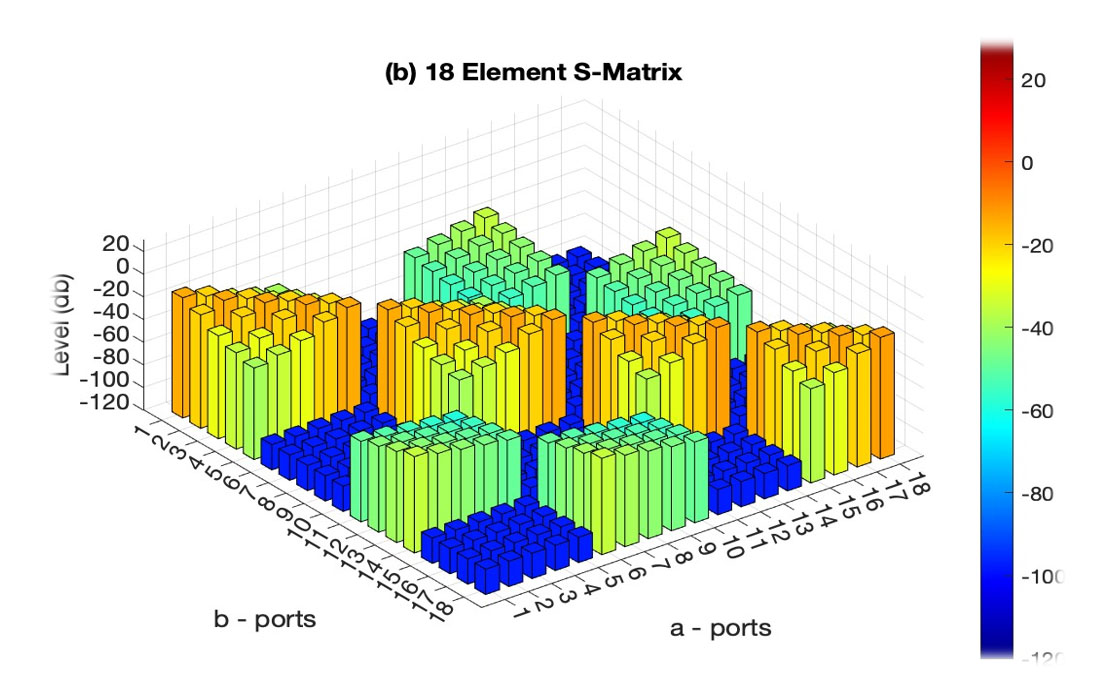
TMT’s In Band Full Duplex (IBFD) is a MIMO-compatible antenna and software technology providing signal interference cancellation via its Adaptive-Array Antenna which allows simultaneous transmit and Receive = Doubling Data Rates.  TM-IBFD development has shown a combined 120 db noise reduction in two-way communications, which provides up to a 100% gain in wireless data transport efficiency.

TMT believes that the use of its patented methods can prevent or delay the onset of a wireless “bandwidth crunch” and focuses on developing products for a range of applications. These products will use core technology to provide solutions and create value for customers, the economy, and the global wireless infrastructure.  The company says that the TM-IBFD is backwards compatible and complimentary with existing beam forming or beam shaping installations.

Image Courtesy of TM Technologies (TMT)

……………………………………………………………………………………………………………………………………..

Using the latest Xilinx RFSoC devices, TMT has produced a Software Defined Radio (SDR) format with OFDM as primary modulation with multiple TM channel overlays. This is applicable to nearly any access or backhaul radio device with adequate head-space and operating within the 3GPP Rel 16 specifications.

Industry analyst Jeff Kagan wrote: “Spectrum shortage remains a problem that is not going to solve itself. That’s why new solutions like this are necessary….In the case of solving this spectrum crisis, there are two different groups to focus on. One, is the wireless carriers. Two, are wireless network builders. Either, the customer, which is the wireless network needs to demand this from their network builders. Or the network builders need to embrace this as a competitive advantage and as a solution to their customers.”

TM Technologies and Quantum Resistant Cryptography Team Up to Increase Speed and Security of 5G/6G, Satellite and Near Field Communications

ORIGINAL ARTICLE APPEARS on NEWSWIRE.COM

TM Technologies has partnered with Switzerland’s Quantum Resistant Cryptography, S.A. (QRC) to increase both the speed and security of wireless communications. QRC’s cutting-edge encryption is nine orders of magnitude stronger than AES-256, providing unparalleled quantum resistance. The combination of TM Technologies’ bandwidth-optimizing Cognitive Spectrum Optimization (“CSO”) with QRC’s best-of-class encryption is now capable of providing low-latency quantum-resistant communications at speeds that exceed current non-encrypted communications.

The advent of quantum computing is widely understood to pose an imminent threat to the security of all conventionally encrypted information, including communications of passwords, transactions, and personal information.

The incorporation of QRC quantum-resistant encryption will initially be applied to three leading Transpositional Modulation use cases:

  • Near Field Communications: Used commonly in point of sale from credit cards and mobile applications as well as in the hospitality and healthcare industries, the quantum-resistant QRC encryption combined with TM Technologies’ CSO is estimated to exceed current NFC speeds by 13.5x.
  • Satellite Communications: Whether geostationary, conventional LEO or LEO direct to device, TM + QRC offers a means to increase download speeds while greatly improving security.
  • 5G / 6G: 3GPP-compatible and ORAN-compatible high-security use cases, such as in the enterprise, smart cities or law enforcement, can utilize this speed and security enhancement to stay ahead of emerging threats.

TM Technologies Director of Research and Development Dr. Scott Velasquez said, “Transpositional Modulation has existing security features that make it one of the most efficient and secure waveforms in existence, and our QRC partnership adds an important component of export-compliant quantum-resistant encryption that make sense for all customers interested in future-proofing their secure communications.”

“TM Technologies’ innovative solution has created dramatically faster contactless transactions,” said Stiepan Kovac, founder and Group CEO of QRC. “Our advanced encryption adds the best security to this novel technology without negatively affecting the efficacy or speed. We are very proud of this novel collaboration.”

About TM Technologies, Inc. www.tmtechnologies.com

TM Technologies is a privately held, independent technology research, development and intellectual property firm founded in 2013. With engineering and lab space in San Diego, California, and its administrative offices in Little Switzerland, North Carolina, TM provides software licenses and integrative engineering to customers in the fields of advanced wireless technologies, Near Field Communications and In-Band-Full-Duplex solutions.

About Quantum Resistant Cryptography, S.A. www.QRcrypto.ch

QRC provides forward-thinking encryption solutions that are energy-efficient, quantum-resistant, 5G/6G+-compatible and enable future-proof communications, public infrastructure, financial transactions, and private data protection. QRC’s unique patented quantum-safe technology in 5G systems is the only solution recommended by the United Nations International Telecom Union (UN ITU-T).

Kagan: TM Technologies, QRC partner to improve wireless speed, security

Quantum Computing

ARTICLE ORGINALLY APPEARS on RCR WIRELESS NEWS

Wireless speed and security increased on 5G, 6G, satellite and NFC

At Mobile World Congress in Barcelona, I look for interesting companies and stories. TM Technologies and Quantum Resistant Cryptography or QRC are one of those stories. They announced that they teamed up to increase speed and provide more security in the wireless industry. Their partnership is focused on and designed to work with new and current technology including 5G, 6G, satellite and Near Field Communications.

As wireless continues to move forward with new technology and new vision, they tell me that QRC crytopraphy is nine orders of magnitude stronger than AES-256. This provides unparalleled quantum resistance.

The combination of TM Technologies bandwidth-optimizing Cognitive Spectrum Optimization, or CSO, along with the QRC best-of-class encryption, is capable of providing low-latency quantum-resistant communications at speeds that exceed current non-encrypted communications.

How quantum computing and resistance is impacting wireless industry

Quantum computing is thought to pose a threat to the security of all conventionally encrypted information. That means passwords, transactions, personal information, corporate information, government information and so much more.

QRC (quantum-resistant cryptography) will initially be applied to some leading transpositional modulation cases including Near Field Communications, satellite communications and 5G/6G.

TM Technologies Director of Research and Development Dr. Scott Velasquez said, “Transpositional Modulation has existing security features that make it one of the most efficient and secure waveforms in existence, and our QRC partnership adds an important component of export-compliant quantum-resistant encryption that make sense for all customers interested in future-proofing their secure communications.”

FWA, wireless broadband, 5G-Advanced, private wireless, satellite

As we look backwards, the wireless industry has been focused on traditional growth.

Looking forward, growth means something very different. Long-term, the wireless industry continues to be the rock-solid, long-term success story as it has been over the past half century, both with traditional mobile services and new services as well.

That being said, the focus of growth in wireless is changing, just as it has been time and time again.

Today, rapid growth is coming from a variety of new areas like FWA or Fixed Wireless Access which has created wireless broadband for the home and office. Or 5.5G advanced wireless. Or 5G-Advanced. Or private wireless, satellite services and more.

Going forward expect more new areas of growth and change in wireless

In fact, as we move forward, expect more areas of new growth, new partnerships, new acquisitions and more to emerge onto the marketplace. New ways and new technology to build our wireless world and everything connected to it.

Wireless has been with us for many decades already. Over time it has been transforming from analog to digital, from installed to handheld, from voice to data to video and more.

Now with 5G and the coming 6G, wireless continues to expand to AI, Near Field Communications, satellite communications and 5G / 6G, FWA, wireless broadband, 5.5G, 5G-Advanced, private wireless, satellite connectivity and more.

I would say the wireless industry is at the beginning of a new chapter. The next growth-wave.

As this next chapter the wireless story continues to unfold, it is good news for new companies with new ideas and new solutions to new problems. And for workers looking for the next, hot thing. Investors are also looking for the next big growth-wave and the companies who will lead it.

The Future of Secure Communications: How Quantum-Resistant Encryption is Revolutionizing Wireless Technology

Syndicated article. Original article published on BestStocks.com.

In the realm of wireless technology, security has always been a paramount concern. As our world becomes increasingly interconnected and reliant on wireless communications, the need for robust encryption methods has never been greater. Enter quantum-resistant encryption, a cutting-edge solution that is revolutionizing the way we safeguard sensitive data in various industries, from 5G networks to satellite communication systems. In this article, we’ll explore the rising trend of quantum-resistant encryption and its profound impact on enhancing the security of wireless communications.

The Rise of Quantum-Resistant Encryption

5G satelieteTraditional encryption methods, such as AES and a symmetric key exchange, have long been relied upon to secure wireless communications. However, the emergence of quantum computing poses a significant threat to these conventional encryption techniques. Quantum computers have the potential to break current encryption algorithms in a fraction of the time it takes traditional computers, rendering them obsolete in the face of this new technological advancement.

Quantum-resistant encryption offers a solution to this impending threat by fixing fundamental weaknesses in existing encryption standards to create encryption algorithms that are impervious to quantum attacks. These algorithms are designed to withstand the immense computational power of quantum computers, ensuring the security of wireless communications in an era where quantum computing is becoming increasingly feasible.

Applications Across Industries

The impact of quantum-resistant encryption extends far beyond theoretical discussions, with real-world applications spanning a wide range of industries. In the realm of 5G networks, where high-speed data transmission is paramount, quantum-resistant encryption provides an extra layer of security to safeguard sensitive information transmitted over the airwaves. This is particularly crucial in industries such as healthcare and finance, where the integrity of data is of utmost importance while defending against side channel attacks, including ML/AI-enabled attacks.

Satellite communication systems also stand to benefit significantly from quantum-resistant encryption. With satellites transmitting vast amounts of data across long distances, ensuring the security of these transmissions is essential to protect against potential eavesdropping or tampering. Quantum-resistant encryption provides a robust solution to these security challenges, ensuring that sensitive data transmitted via satellite remains secure from prying eyes.

Future Outlooks

6G sateliteLooking ahead, the adoption of quantum-resistant encryption is poised to continue its upward trajectory, driven by the growing awareness of the vulnerabilities posed by quantum computing. As quantum computers become increasingly powerful and accessible, the need for robust security measures will become even more pressing.

One area of particular interest is the integration of quantum-resistant encryption into emerging technologies such as the Internet of Things (IoT) and smart cities. With billions of interconnected devices expected to be deployed in the coming years, ensuring the security of these devices and the data they transmit will be paramount. Quantum-resistant encryption offers a viable solution to this challenge, providing a level of security that can withstand the potential threats posed by quantum computing, while offering best security now.

Enhancing Wireless Security

TM Technologies and Quantum Resistant Cryptography (QRC) have collaborated to bolster the security and efficiency of wireless communications, focusing on 5G/6G, satellite, and NFC technologies. QRC’s encryption, substantially stronger than AES-256, offers quantum resistance against emerging threats from quantum computing. By integrating QRC’s encryption with TM Technologies’ Cognitive Spectrum Optimization (CSO), they achieve low-latency, quantum-resistant communications exceeding current non-encrypted speeds.

This partnership targets three main areas: NFC, satellite communications, and 5G/6G applications. For NFC, the integrated technology significantly enhances speeds while ensuring improved security. In satellite communications, it elevates download speeds and security across various satellite types, as per a recent press release. In high-security environments like enterprise and law enforcement, the collaboration provides enhanced speed and security to counter existing and emerging threats in 5G/6G applications.

TM Technologies’ Director of Research and Development, Dr. Scott Velasquez, underscores the importance of integrating QRC’s encryption for future-proof, secure communications here and now.

Stiepan Kovac, founder and Group CEO of QRC, acknowledges TM Technologies’ innovation in enhancing contactless transactions while maintaining speed and efficacy. Both companies, dedicated to providing advanced, energy-efficient, and future-proof encryption solutions, aim to enhance secure wireless communications across diverse applications.

Conclusion

As we continue to push the boundaries of wireless technology, the need for robust security measures becomes increasingly apparent. Quantum-resistant encryption represents a paradigm shift in the way we approach security in wireless communications, offering a solution that is not only secure but also future-proof in the face of emerging technological threats.

From 5G networks to satellite communication systems, the impact of quantum-resistant encryption is profound, revolutionizing the way we safeguard sensitive data in an increasingly interconnected world. As we look to the future, it’s clear that quantum-resistant encryption is to play a pivotal role in ensuring the security of wireless communications across a myriad of industries.